When AI Assistance Saves Work and When It Adds Friction
AI assistance is useful when it removes bounded work without hiding important judgment. This framework helps assess effort, review, control and failure.
Supermoon Software / September 22, 2026 / 5 min read
AI assistance can reduce effort when it handles a well-bounded step inside a larger task. It can also move effort elsewhere, turning a simple action into prompting, checking, correcting and recovering. The useful question is not whether a feature contains AI, but whether the complete workflow becomes easier to understand and operate.
That assessment requires looking beyond the generated result. Input preparation, waiting, review, correction and uncertainty all belong in the effort calculation. A feature earns its place when those costs remain proportionate to the work it removes and to the consequences of an error.
Measure the whole task, not the impressive moment
A polished output can make an assisted workflow appear efficient while concealing the steps around it. Evaluate the path from initial intent to an accepted result. If someone must repeatedly restate context, inspect every detail or transfer the output into another tool, the apparent shortcut may only have rearranged the work.
A practical assessment should account for the work surrounding the generated result, including preparation before processing, attention during the task and any review or repair required afterward:
Preparation needed to provide usable source material and instructions.
Attention required while the software processes the request.
Review needed to detect omissions, distortions or unsuitable choices.
Correction work required before the result can be used.
Recovery steps when the feature fails or produces an uncertain result.
This broader view also prevents speed from becoming the only measure. A slower assisted step may still be worthwhile if it reduces tedious manipulation while preserving clear control. Conversely, a fast output may create friction if checking it demands more concentration than completing the original task directly.
Look for bounded, inspectable work
AI assistance is easier to justify when the task has clear inputs, a narrow purpose and an output that can be reviewed without specialist investigation. Hypothetical examples include grouping a personal set of notes by topic, suggesting labels for selected files or turning supplied points into a draft structure. In each case, the source remains available for comparison.
A proposed feature can be examined as a sequence of product decisions, starting with the underlying task and ending with a comparison between assisted and manual routes:
State the task without referring to AI or a specific interface.
Identify the repetitive or interpretive step that creates effort.
Define what information the feature may use and what it must ignore.
Specify how a person can inspect, edit, reject or reverse the result.
Compare the complete assisted path with a straightforward manual alternative.
A good boundary separates assistance from authority. The software may propose an arrangement, summary or next step while leaving consequential judgment visible. This makes review part of the design rather than an afterthought added when an output appears questionable.
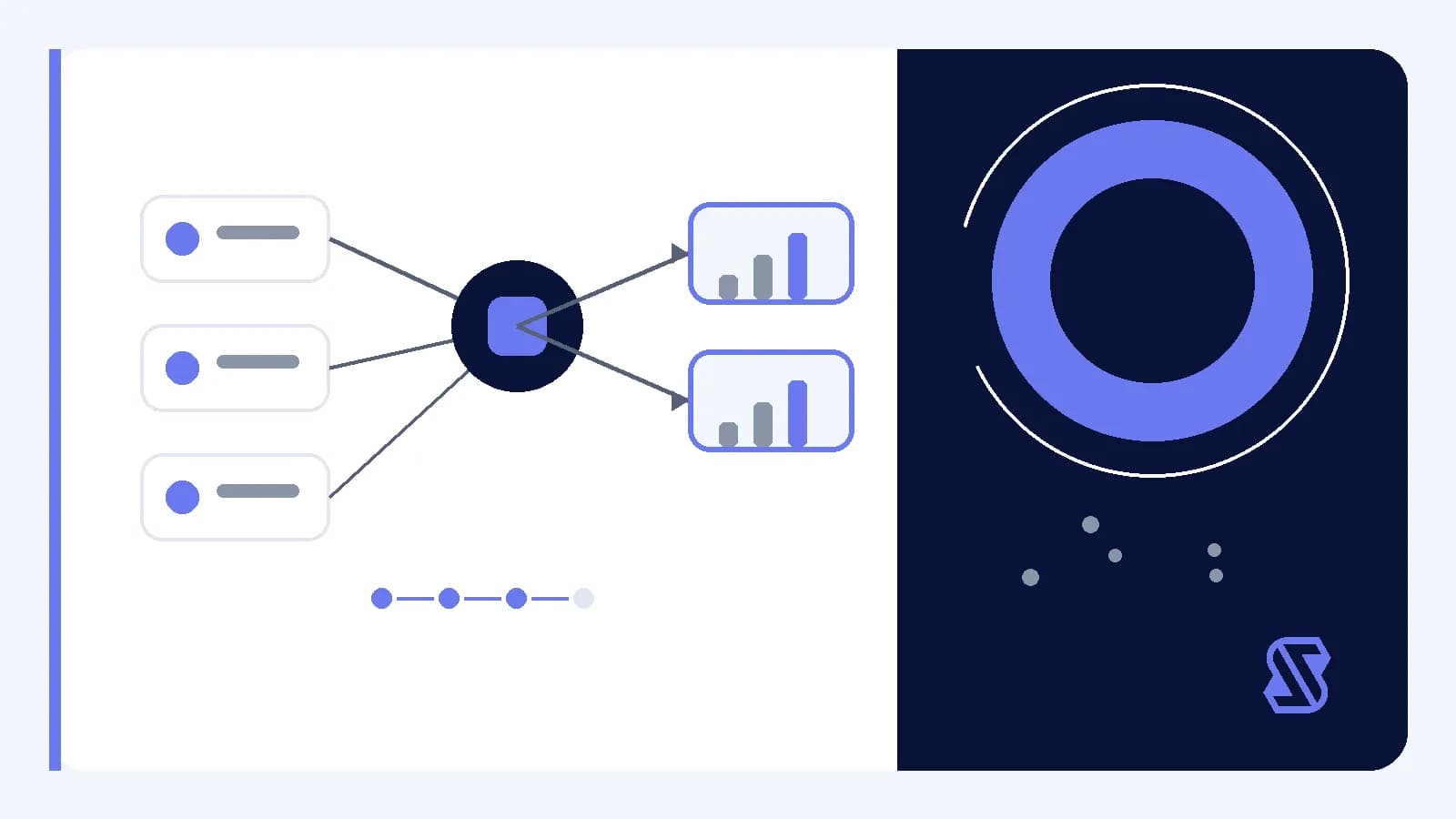
The bounded workflow makes the inputs, processing step and point of human review visible.
Notice when interaction overhead replaces manual work
Prompting is not automatically simpler than direct manipulation. If a task is already represented by clear controls, asking someone to describe the same operation in natural language may introduce ambiguity. The design question is whether language captures intent more efficiently than selecting, sorting or editing the material directly.
Interaction overhead can arise at several points in the assisted path, so a team should inspect how context, waiting, comparison and repair affect the complete task:
Repeatedly explaining context that the current screen already contains.
Guessing which wording will produce an acceptable result.
Waiting without a clear indication of progress or cancellation options.
Comparing several plausible outputs without a useful decision rule.
Repairing changes after the original structure has been obscured.
These problems do not imply that language-based input is unsuitable. They suggest that the interface should combine it with visible scope and direct controls. A request such as reorganize this material becomes easier to assess when this material is explicitly selected, the proposed changes are previewed and the original remains recoverable.
Make review proportional to the possible error
Review should be designed around consequences, not around the novelty of the feature. A low-impact suggestion can often support lightweight acceptance or dismissal. A change involving sensitive material, irreversible actions or communication sent to another person warrants a clearer checkpoint. The team should verify these consequences within the specific product rather than assume one review pattern fits every task.
The loop frames evaluation around inputs, measurement, status checks and deliberate human control.
Evaluation should include realistic inputs that are incomplete, awkward or outside the intended scope. The purpose is not to find a single quality score, but to understand where the workflow remains controllable. Teams can record whether the feature declines unsuitable work, exposes uncertainty in a useful way and lets a person recover without reconstructing the task.
Preserve orientation and direct control
An assisted interface should make three things legible: what information is being used, what operation is being proposed and what will change if the result is accepted. These cues reduce the need to infer hidden scope. They also help distinguish a draft from a completed action, which matters whenever the same surface supports both suggestions and execution.
Control does not require presenting every technical detail. It requires controls that match the decision. Preview, edit, retry, undo and manual completion are different responses to different failure modes. The appropriate set depends on whether outputs can be partially useful, whether changes are reversible and whether retrying introduces meaningful cost or delay.
A manual route should remain coherent rather than serving as a neglected fallback. It provides a baseline for comparing effort and a recovery path when the assisted route is unsuitable. If the manual option becomes hard to find or understand, the feature may create dependency without demonstrating that it consistently reduces work.
Decide from effort, consequence and control
A practical decision can rest on three questions. Does the assistance remove more work than it creates across preparation, review and correction? Are likely mistakes easy to notice relative to their consequences? Can a person understand the scope, change the result and return to a dependable manual path?
If those answers remain unclear, narrow the task before expanding the feature. Constrain the inputs, reduce the authority of the output or add a visible review step. AI assistance is most defensible as a specific part of a comprehensible workflow, not as a substitute for defining the task itself.