Predictable Mobile Navigation Without Uniform Design
A practical framework for making mobile navigation understandable through stable structure, visible state, careful transitions and a distinct visual identity.
Supermoon Software / August 21, 2026 / 5 min read
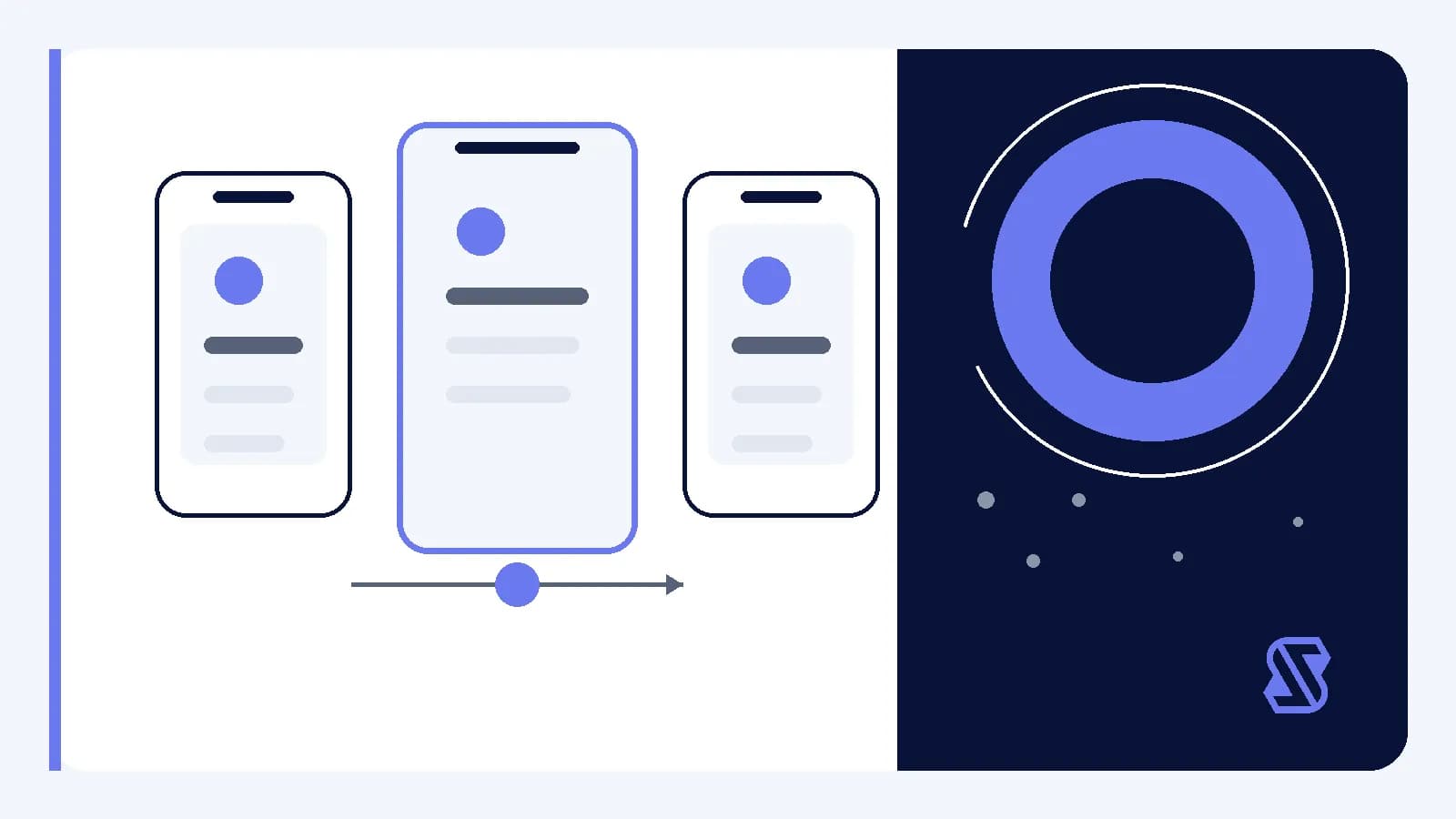
Mobile navigation becomes predictable when the interface gives consistent answers to a few basic questions: where am I, what can I do here, where will this control take me, and how can I return? Those answers can remain stable even when typography, color, imagery, motion and composition differ substantially between products.
The useful distinction is between navigational structure and visual expression. Structure organizes destinations, actions and movement. Expression gives those elements a particular character. When a team treats both as one problem, originality can weaken clarity or familiar patterns can flatten the design. Separating them creates room for an app to feel distinct without making its basic movement difficult to interpret.
Treat navigation as a product contract
A navigation contract is the set of rules that governs how people move through an app. It is not a visible document, but the interface should make it legible. A destination should have a recognizable purpose, a control should lead somewhere consistent, and returning should not depend on remembering an unexplained exception.
The contract can be reviewed through a small set of design questions. These do not prescribe a particular layout. They establish the information that each layout needs to communicate.
- Does each primary control keep the same role across relevant screens?
- Can the current location be identified without reconstructing the previous journey?
- Does a return control lead to a destination the interface has prepared the person to expect?
- Are temporary actions visually distinct from movement to another part of the app?
Visual identity can then work within these rules. A reading app and a planning app might use different proportions, labels, transitions and imagery while preserving equally clear relationships between current location, available action and expected destination.
Map journeys as connected states
A state is the app’s current combination of location, selected content, entered information and task progress. Navigation design becomes more concrete when teams map states rather than drawing isolated screens. The map should show how someone can enter a state, what can change there and which parts should remain when moving elsewhere.
A useful review sequence moves from broad structure to individual transitions. A transition is the movement from one interface state to another, including any change in content, controls or retained progress.
- Name each destination by its product purpose rather than its visual layout.
- Identify every supported entry point into that destination.
- Record which state should remain when the person leaves.
- Define the expected destination for each visible navigation control.
- Mark any transition whose result depends on an unresolved product rule.
This map can reveal decisions that polished screens may hide. If two controls reach the same destination but produce different retained state, the team should decide whether that difference is intentional and visible. If an interrupted task can be resumed, the team should define which step reappears and what context accompanies it.
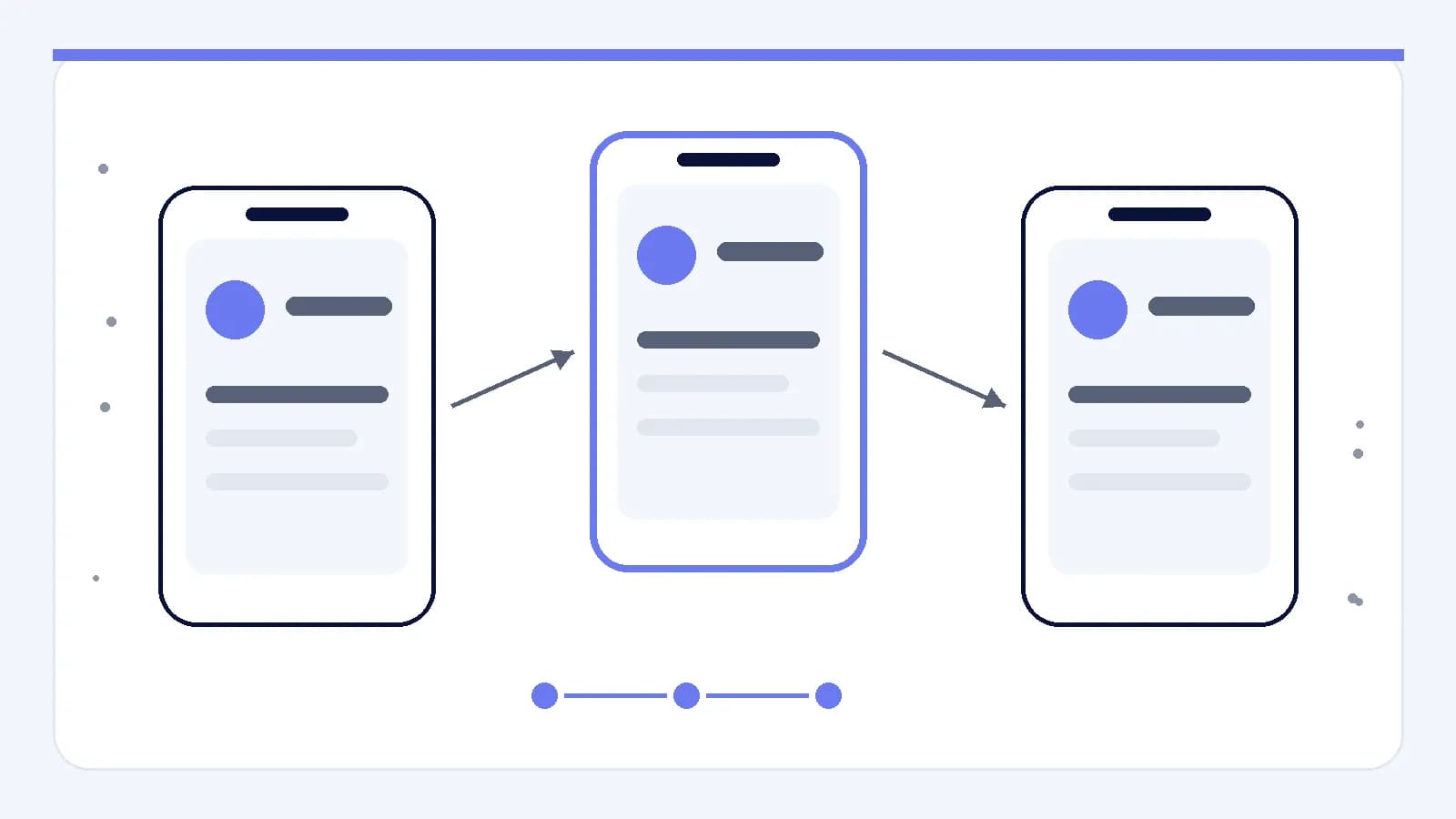
Keep structure stable and surfaces expressive
Predictability does not require every screen to use the same composition. It requires stable relationships between controls and outcomes. A persistent destination control, meaning a control that remains available across major areas, can change visually while retaining its role. A temporary action can be prominent without resembling a route to another section.
Teams can place expressive choices in parts of the interface that do not alter the navigation contract. The boundary will vary by product, but the following separation offers a practical starting point.
- Keep destination names, control roles and return paths stable across related states.
- Use typography, color, shape and illustration to establish tone without changing meaning.
- Let motion explain a transition rather than disguise an unexpected destination.
- Reserve unusual interaction patterns for cases where their purpose can be made visible.
When adapting an app across mobile environments, the team should verify the conventions, available controls and accessibility conditions of each target environment rather than assuming that one pattern transfers unchanged. The underlying destination model can remain coherent while its presentation responds to those verified implementation conditions.
Give shared state a clear owner
Navigation becomes harder to reason about when several interfaces can modify the same state. Shared state is information used by more than one screen, such as a selected item, draft input or active filter. The design should establish which part of the product owns that information, when another screen may change it and how the change becomes visible.
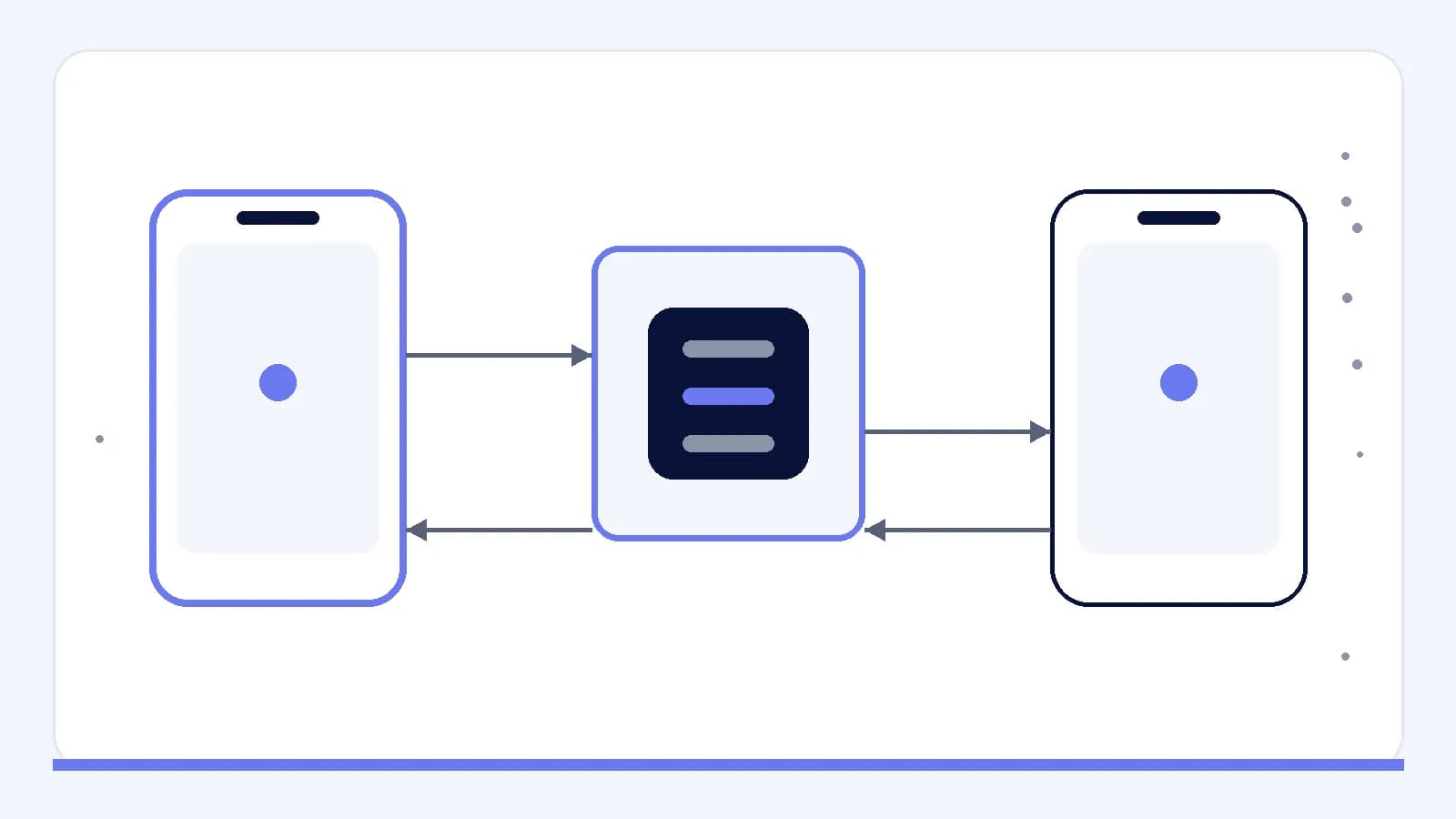
Imagine that a selection made in one interface changes the content shown in another. The product needs a rule for whether returning restores the earlier view, presents the new selection or asks for confirmation before replacing unfinished work. The appropriate choice depends on the task, but an implicit rule leaves the interface without a defined answer. A shared, controlled state system can provide a source of truth, meaning one defined record that determines what the interfaces present.
Test rules at the edges of the journey
A clean primary path does not cover every navigation condition. Review should also include interrupted tasks, empty destinations, failed changes and entry from outside the expected sequence. These cases test whether the navigation contract still provides enough information about the current location and available next step.
The review can use concrete scenarios without assuming a particular operating system or external platform behavior. Any system-level action, notification entry or gesture included in the product should be verified in its actual implementation environment.
- Enter a destination without passing through its usual parent screen.
- Leave a multi-step task and return after changing another part of the app.
- Attempt to navigate while a save, upload or other change is unresolved.
- Open a destination whose expected content is unavailable or empty.
- Repeat the journey using the supported accessibility and input configurations.
For each scenario, record the displayed location, retained state, available controls and expected return destination. If those elements conflict, the team can treat the conflict as a product rule that needs clarification rather than only a visual defect. The appropriate response might be a clearer label, a revised hierarchy or a different state policy.
Build distinction on dependable navigation rules
A practical navigation framework begins with destinations, states, transitions and ownership. Map the important journeys, define what remains stable, separate movement from temporary action, and verify edge conditions in each supported environment. Together, these decisions form the dependable layer of the interface.
Distinctive design can then shape that layer through composition, language, color, motion and imagery. The aim is not to reproduce a common template. It is to make the product’s own rules visible enough that visual character does not have to carry the full burden of explaining where each control leads.