Offline, Delayed, Resumed: Mapping Mobile Journeys
A practical framework for treating offline periods, delayed responses and interrupted sessions as normal conditions within a continuous mobile journey.
Supermoon Software / October 16, 2026 / 5 min read
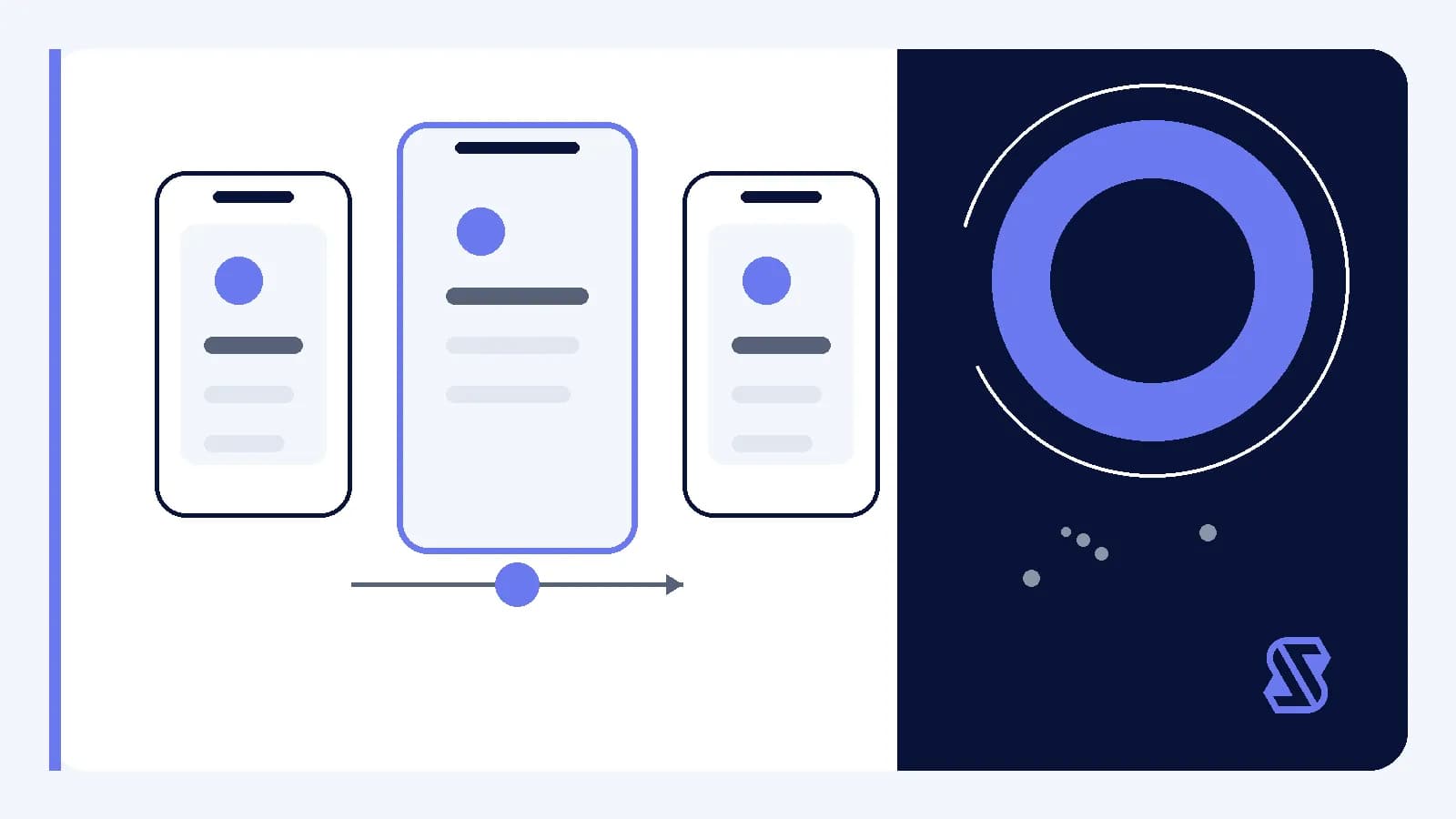
Consider a person who starts an action with a stable connection, continues while the response is delayed, and returns after the app has been closed. The interface must account for the whole journey, not only the moment when the request succeeds. Offline operation, meaning no usable network path, is one condition within that broader continuity problem.
Latency is the delay between an action and its response. An interrupted session is a product journey paused before the app has fully resolved the person’s intent. Treating both as design inputs leads to clearer questions: what can continue locally, what requires confirmation, and what should be shown when certainty is unavailable?
Map the journey before choosing a fallback
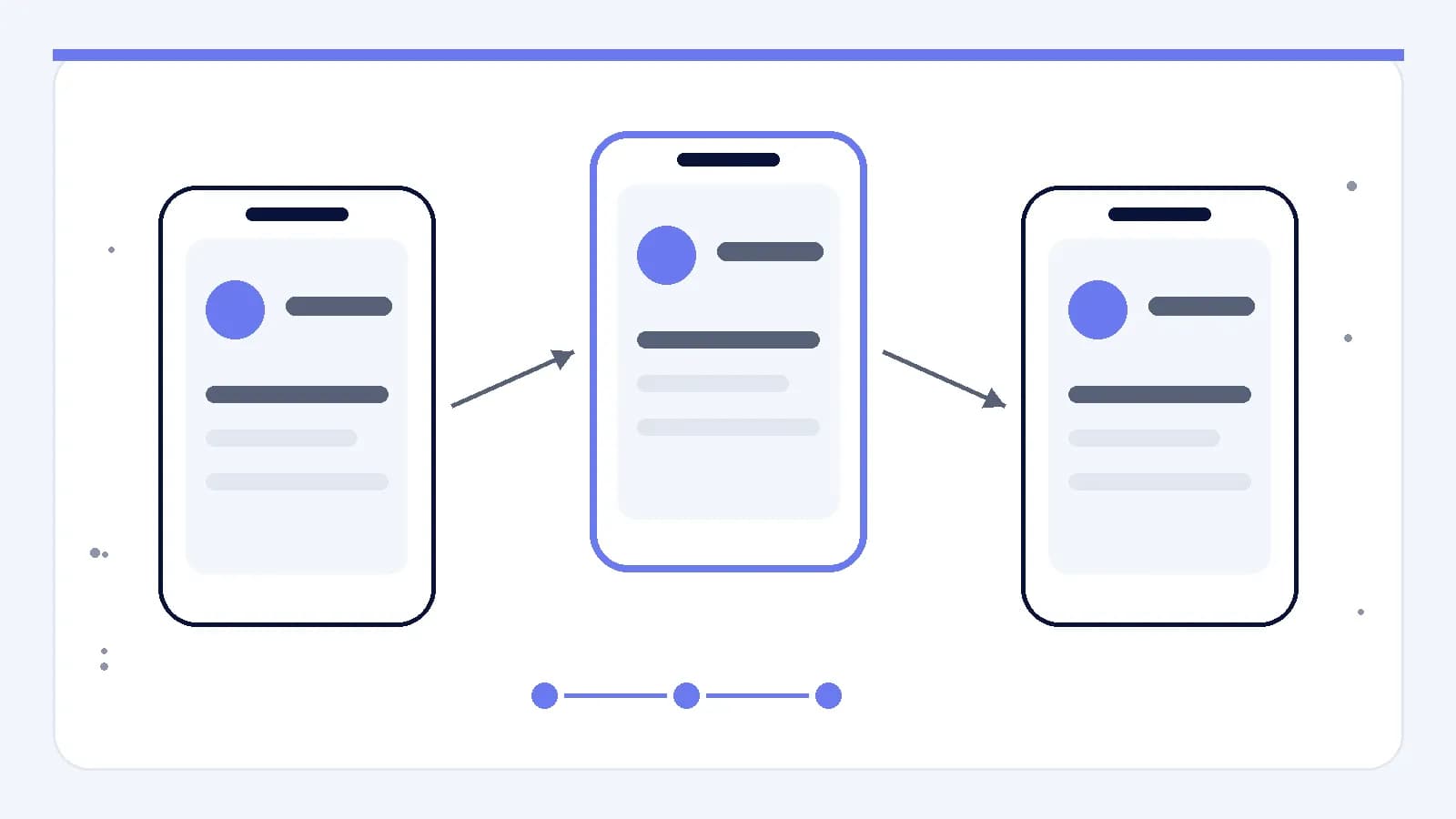
Begin with the intended action and trace every state it can enter. A document might be untouched, edited locally, waiting to upload, confirmed remotely or blocked by a conflict. Naming these states prevents a vague loading screen from covering several situations that require different explanations or controls.
The map should include exits and returns. Ask what remains if the app closes, the connection changes or a response arrives after the visible screen has gone. Rather than compiling edge cases, describe the product journey under each implementation condition the team needs to support and verify.
- Identify the person’s intent separately from the network request used to carry it out.
- Mark which steps can be completed locally and which require remote confirmation.
- Record what the interface shows while the result remains uncertain.
- Define where a returning session resumes and what context it restores.
Give every visible state a clear meaning
State is the information an app retains about the current situation. Some state belongs only to the interface, such as an open panel. Other state represents meaningful progress, such as an edited draft. Product teams should decide which information must survive interruption and place it in durable storage, meaning storage intended to remain available after the current session ends.
Visible labels should distinguish progress from confirmation. Saved on this device, waiting to send and unable to confirm describe different conditions. The exact wording depends on the product, but each message should answer what happened, whether the person needs to act and whether their work remains available.
- Name the meaningful state in product language rather than implementation language.
- Decide what evidence allows the app to display that state confidently.
- Provide a next action only when intervention can change the result.
- Preserve enough context for the message to remain understandable after a return.
Separate local progress from shared truth
A source of truth is the controlled record a product treats as authoritative when copies disagree. An app may keep local work while awaiting comparison with that record. The interface should not imply remote confirmation merely because local storage succeeded, but it also should not present useful local progress as though it were lost.
An optimistic update presents an intended result before remote confirmation arrives. This choice can replace visible waiting with provisional status, but the team must then define what happens after rejection, delay or correction. Consider it when the provisional state is understandable and reversible. For consequential or irreversible actions, explicit confirmation can provide a clearer boundary.
- Show provisional status where a later correction could otherwise appear surprising.
- Keep local edits available while remote confirmation remains unresolved.
- Explain conflicts through the affected content rather than a generic synchronization error.
- Avoid silent replacement when the product may need to preserve competing changes.
Treat pending work as a managed queue
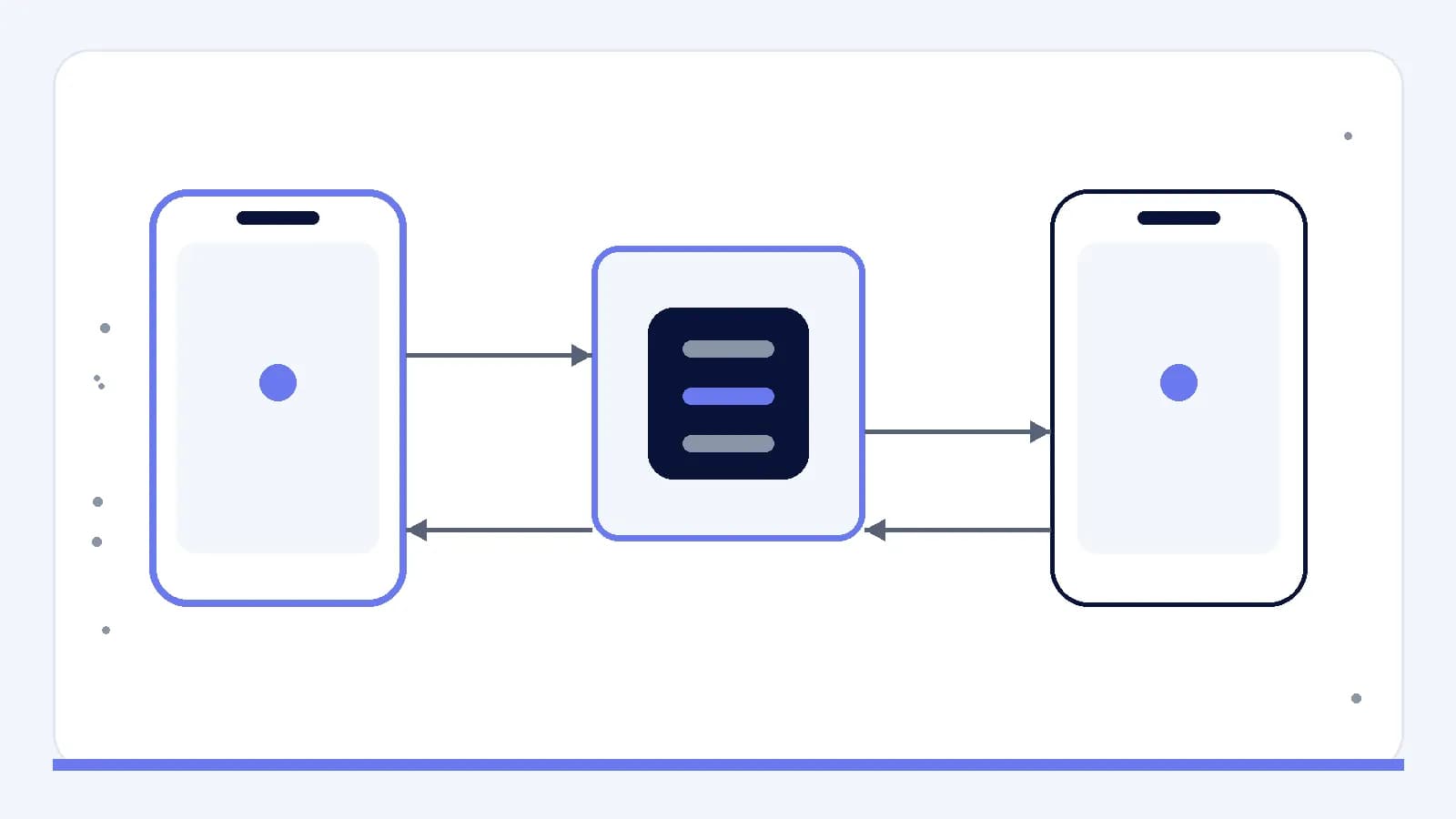
A queue is an ordered collection of operations waiting to be processed. If an action should continue after connectivity returns, represent it as a durable operation rather than an animation attached to one screen. The team should verify implementation conditions around storage, work outside the visible screen and repeated attempts before deciding how independently that queue can run.
Each operation needs an identity, a current status and a retry policy, which defines when another attempt is appropriate. Where the product and remote system permit it, make processing idempotent, meaning that repeating the same operation does not create an additional effect. If the team cannot establish that condition, the product should pause before an ambiguous repeat and provide a way to inspect the unresolved action.
- Store the intended operation with the minimum context required to resume it safely.
- Mark whether processing has not started, remains uncertain, succeeded or needs attention.
- Retry only when the operation and remote system make repetition safe.
- Remove completed work without erasing the context needed to explain the visible result.
Test interruption boundaries, not only screens
Interruption testing should follow actions across boundaries: before submission, during a delayed response, after local storage and before remote confirmation. A focused test changes one condition at a time, then checks both the immediate interface and the state presented after reopening. This gives the team a direct way to locate unclear recovery rules.
Close the app at each meaningful stage of a multi-step action, then restore connectivity before and after pending work is created. Introduce a hypothetical conflicting edit and inspect the resolution path. Return through a different entry point and check whether the status remains understandable without relying on the original screen.
Review the result from the product perspective as well as the technical one. For each test, consider whether technical completion and the visible message agree. Acceptance criteria, meaning the conditions used to judge the journey, should cover retained work, visible status, safe repetition and later alignment with the authoritative record.
Write a continuity contract for each key action
Turn the framework into a continuity contract: a short internal description of what the app preserves, communicates and attempts when an action is interrupted. For each key journey, record the local state, the authoritative record, the conditions for confirmation, the retry rule and the recovery choice available to the person.
The practical decision is not whether an app is simply online or offline. It is how the product represents uncertainty between intent and confirmation. Map the states, distinguish local progress from shared truth, manage pending work explicitly and test every interruption boundary. Together, those decisions form a usable plan for journeys in which continuity cannot be assumed.