Designing Mobile Apps for Broken Continuity
A practical framework for handling offline use, delayed responses and interrupted sessions without treating them as exceptional product failures.
Supermoon Software / July 24, 2026 / 5 min read
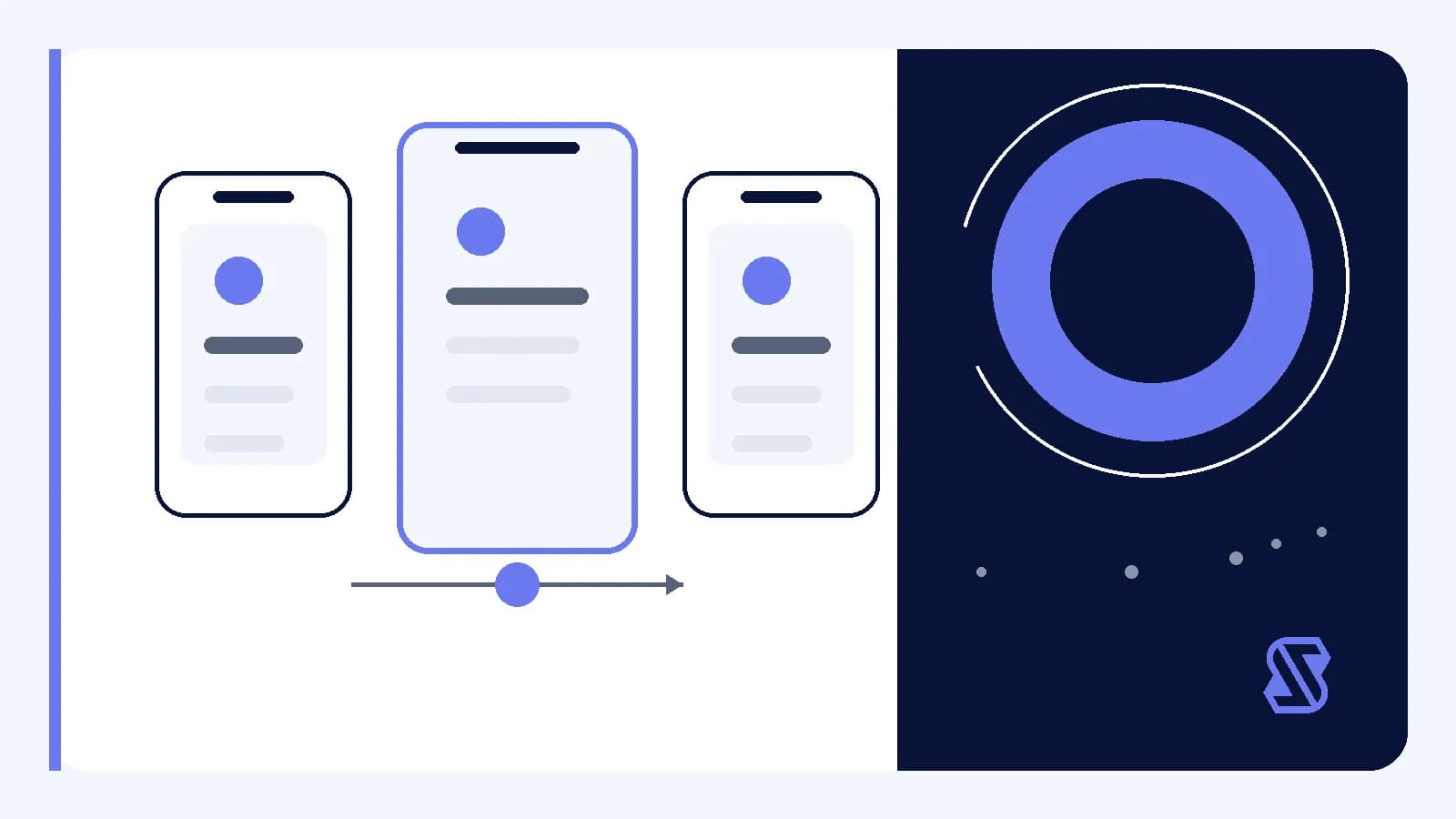
A mobile product should be designed for changing connectivity, delayed responses and sessions that end without warning. These are not merely technical edge cases. They shape whether an action is understandable, whether unfinished work survives and whether the interface can explain what will happen next.
The useful design question is not simply whether an app works offline. It is which parts remain available, what state the device can preserve and how local actions are reconciled when communication resumes. Answering those questions early produces a clearer product model for design, engineering and testing.
Design for continuity, not perfect connection
A connected request can fail before it starts, while it is being processed or after the remote system has accepted it. The interface may not know which case occurred. Product teams therefore need an explicit policy for uncertainty rather than a generic error message that treats every interruption alike.
Continuity means preserving the meaning of the task across those conditions. A reading view might continue from stored material, while a submission flow might hold a completed draft without claiming it was delivered. The appropriate behavior depends on the consequence of delay, duplication and stale information.
Map state before designing screens
State is the information required to represent the product at a particular moment. Local state is held on the device, while remote state is maintained by a controlled service elsewhere. Mapping both reveals which information can be shown immediately, which requires verification and which may become inconsistent.
- Identify information that can remain useful when it is no longer current.
- Mark actions that must not be repeated without checking their remote result.
- Separate unfinished input from confirmed records and temporary interface details.
- Define what should survive a closed session, restart or failed request.
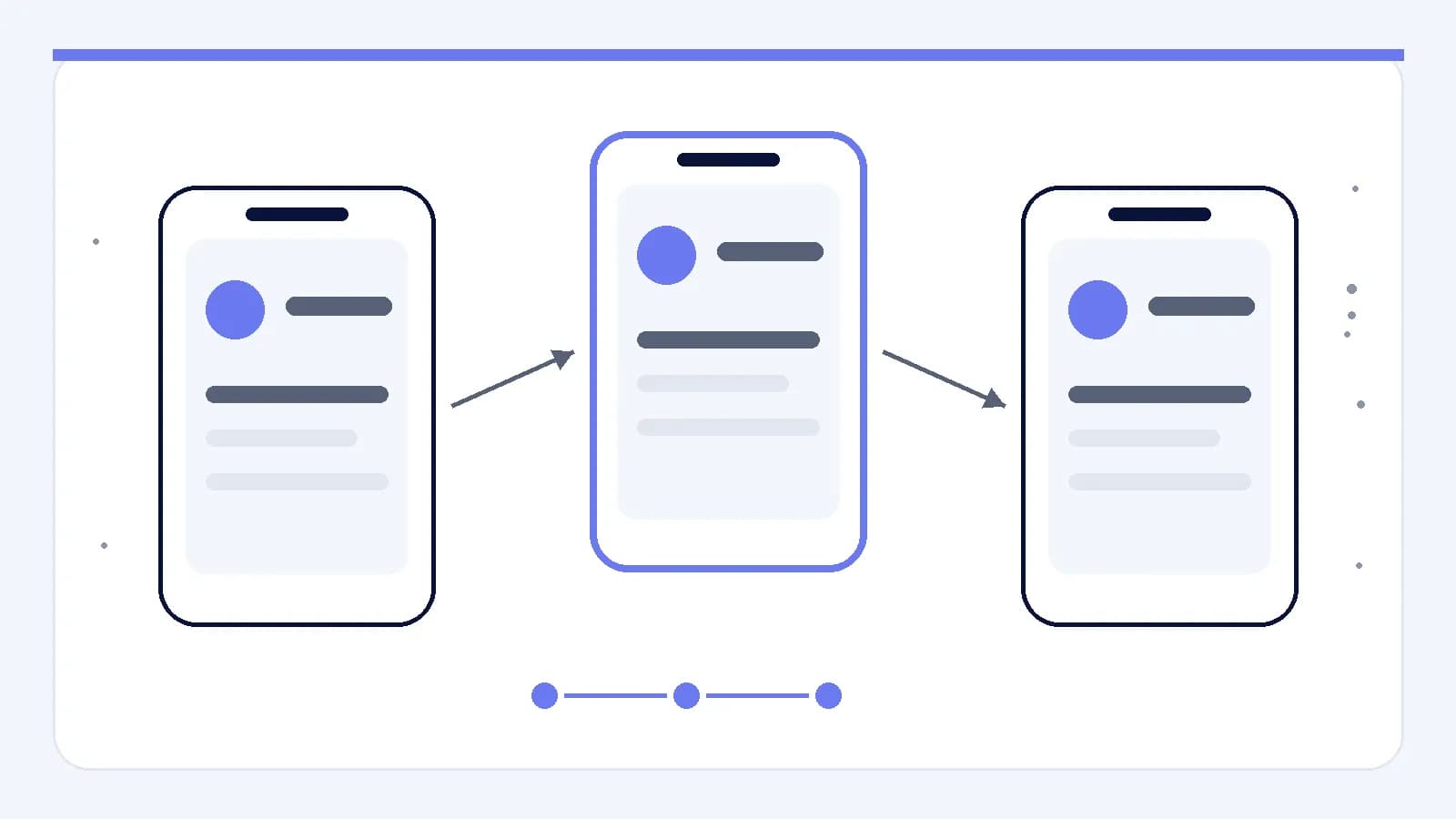
A state map should describe transitions as well as screens. For each important action, ask what the interface shows before the request, during the wait, after confirmation and after an ambiguous failure. This sequence makes missing recovery states visible before they become scattered implementation decisions.
Make delayed actions legible
Latency is the time between initiating an action and receiving a usable response. During that interval, the interface should communicate whether input was accepted locally, whether remote confirmation is pending and whether another action would create a duplicate. A spinner alone rarely answers those product questions.
- Acknowledge the action immediately without implying remote completion.
- Preserve the relevant input while the result remains uncertain.
- Show a stable pending state when waiting may outlast the current screen.
- Offer retry only when repeating the operation is defined as safe.
- Replace temporary status with a confirmed or recoverable result.
A retry policy also needs technical support. Idempotency is a property that lets the same operation be submitted again without applying its intended effect more than once. Where the controlled system can support it, an idempotent request identifier can reduce ambiguity. Where it cannot, the interface may need verification before retrying.
Reconcile local and remote truth
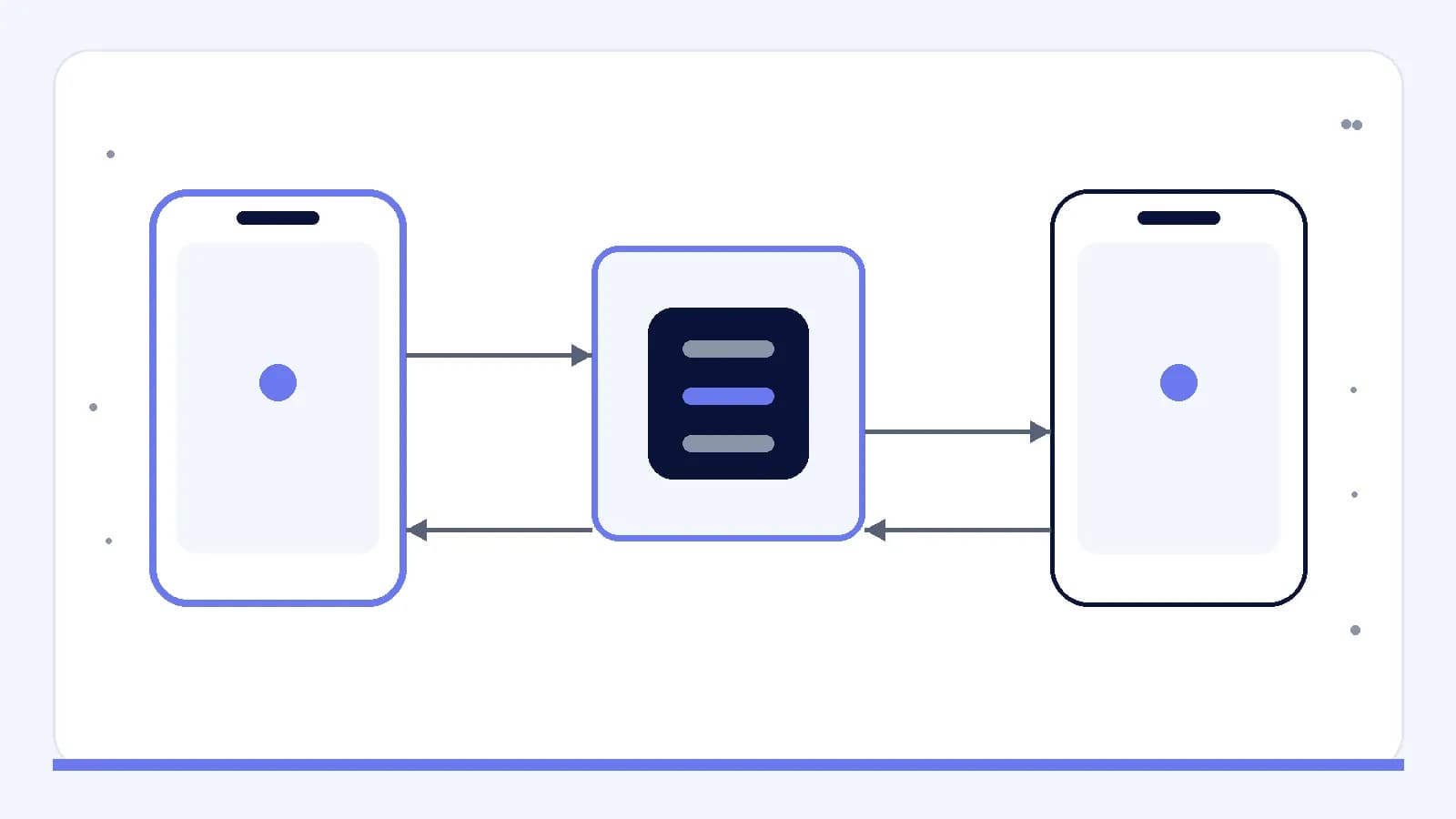
Synchronization is the process of bringing local and remote state into an agreed form. It is not a single refresh action. A product must decide which side has authority for each field, how pending changes are represented and what happens when both sides changed during the interruption.
Conflict resolution is the policy used when competing changes cannot be merged automatically. A harmless preference might use the latest accepted value, while edited content may require preserving both copies or asking for a choice. The policy should follow the meaning of the data rather than applying one rule everywhere.
Preserve interrupted work deliberately
An interrupted session can leave valuable input in memory, in persistent device storage or nowhere at all. Persistence means storing information so it remains available after the current process ends. Teams should decide what deserves persistence, how long it remains relevant and when restoring it could be misleading.
- Save drafts at meaningful boundaries rather than only at final submission.
- Distinguish restored input from information already accepted remotely.
- Avoid preserving sensitive material unless its storage conditions are appropriate.
- Remove obsolete pending work after a clear confirmation or deliberate discard.
Restoration should include context, not just raw values. If an app reopens a form, it may also need to explain whether attachments remain available, whether dependent information needs checking and whether a previous submission is still pending. Those conditions must be verified for the actual platform and storage design.
Test journeys across changing conditions
A screen can appear correct while the broader journey loses data or repeats an action. Testing should therefore vary connectivity and session boundaries during a task. The goal is to inspect the product’s state transitions, including moments when the interface and remote system temporarily know different things.
- Begin an action while connected, then interrupt communication before confirmation.
- Close the session while work is pending, then reopen it.
- Repeat an action after an ambiguous response and inspect the result.
- Change the same information locally and remotely before synchronization.
- Restore connectivity after queued work is no longer valid.
These scenarios are most useful when expected outcomes are written before implementation. For each one, specify what is stored, what the interface may claim, what can be retried and how the product returns to a stable state. Platform-specific background execution and storage behavior should remain verification items, not assumptions.
Choose the failure policy before the polish
A practical framework begins with four decisions: which tasks remain useful without a connection, which actions require remote confirmation, which local work must survive interruption and how conflicting state is reconciled. Those decisions establish the boundaries within which interface details can be designed honestly.
The final review should follow complete journeys rather than isolated success screens. Trace each important action through waiting, disconnection, closure, restoration, retry and conflict. If every transition has an owner, a visible status and a recovery path, offline use and latency become defined product conditions rather than unspecified exceptions.