A practical framework for transparent AI features that separate assistance from execution and preserve meaningful review before consequential actions.
Supermoon Software / October 6, 2026 / 6 min read
An AI feature becomes consequential when its output can lead to a meaningful change, such as sending a message, modifying a record, publishing material or affecting access. The significance comes from the action and its context, not from the presence of AI alone.
Transparency in this setting is not a complete display of internal processing. It is a product decision about what someone needs to inspect, question and change before proceeding. Meaningful control requires clear boundaries between generated material, human judgment and execution, along with a reliable way to stop or revise the process.
Classify the consequence before designing the interface
Start by describing the action in concrete terms. Identify what changes, who or what could be affected and how difficult the change would be to undo. A classification based only on technical complexity may miss the practical consequence of a simple operation. The same generated text, for example, could remain an editable note or become material prepared for publication, depending on the surrounding product decision.
What can change outside the current screen?
Who or what could be affected by the action?
Can the action be undone without creating another problem?
What information is required for an informed review?
Which failures should stop the process entirely?
This classification can guide the amount of review the interface provides. A draft that remains private may justify lightweight controls. A hypothetical feature that submits, publishes or removes something should present a clearer checkpoint. The relevant threshold depends on the product context and should be documented as a design decision, including what requires confirmation and what remains freely editable.
Separate assistance from execution
An interface should distinguish between producing a suggestion and carrying out an action. If both occur through one ambiguous control, the person reviewing the result may not know whether they are editing a proposal or authorizing a change. Separate states give the interface room to communicate what has been generated, what remains editable and what approval would authorize.
Define the request and show the information selected for processing.
Present the generated result as a reviewable draft rather than a completed action.
Allow relevant fields, inputs or instructions to be changed before approval.
Use a distinct confirmation step for the consequential action itself.
The confirmation should name the action rather than rely on broad labels. It should also reflect the latest reviewed state. If an edit causes the system to generate a materially different result, the interface should return to review instead of treating the earlier approval as permission for the new result. Teams should also decide whether closing, navigating away or losing a connection preserves the draft, cancels the action or requests confirmation again.
Show the chain from input to review
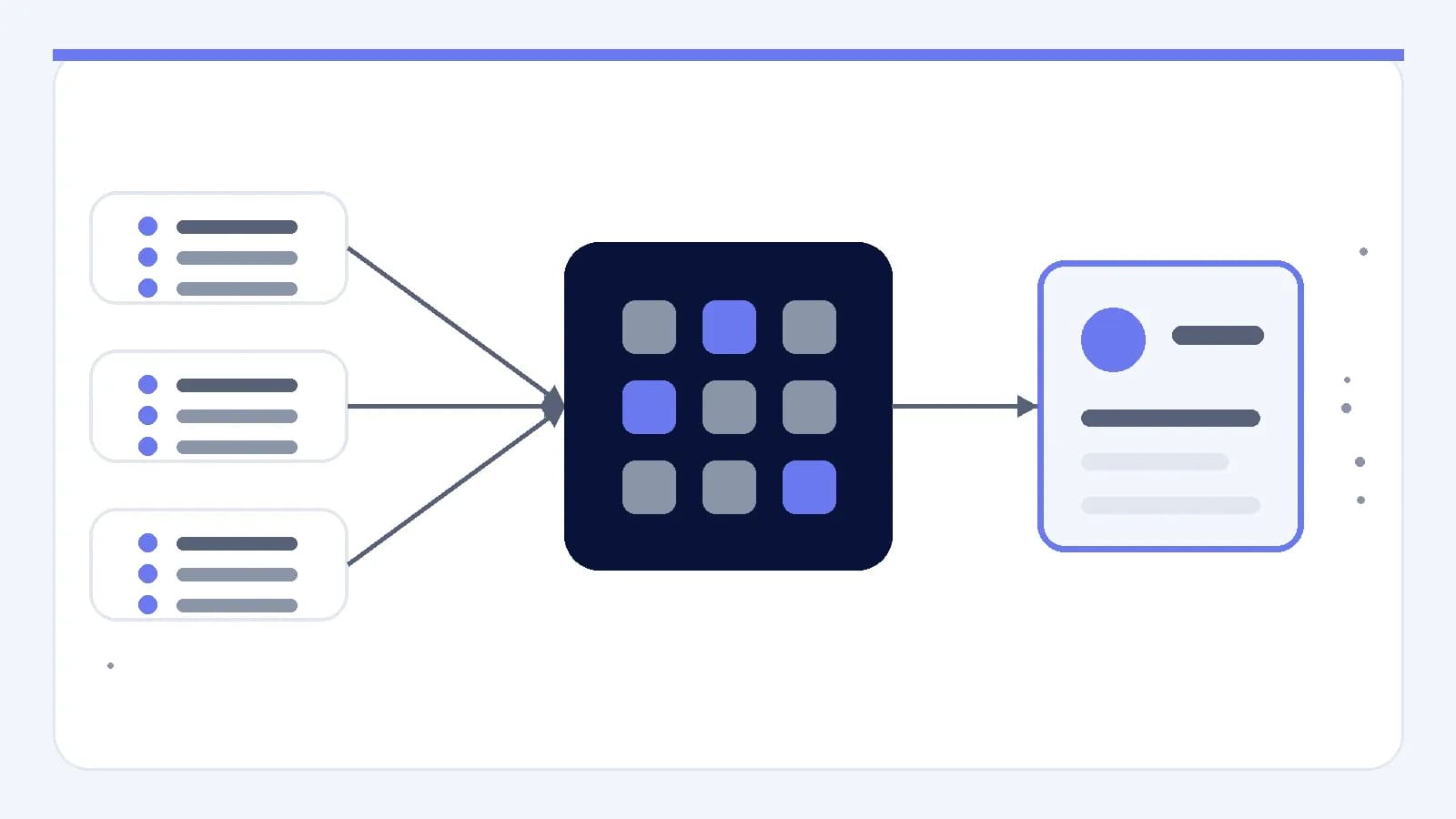
A useful explanation follows the decision path. It identifies the selected inputs, the processing step, the generated result and the point where human review occurs. This does not require exposing every internal parameter. It requires presenting the parts that could change the reviewer’s decision, while avoiding technical detail that does not support that decision.
The path from selected inputs through processing to the information available during human review.
If the feature combines several sources, label them by role and make removable inputs visible. When transformations matter, describe them in practical language, such as summarizing selected notes or grouping submitted records. If the origin of an input cannot be established within the product, the interface should show that limitation rather than present the source as verified.
The explanation should stay connected to the current result. If an input is removed, replaced or refreshed, the review state should make clear that the result may no longer correspond to the previously inspected material. This is a reasoned product rule: approval belongs to a specific combination of inputs, instructions, output and intended action, not merely to the screen where approval occurred.
Build review around the decision
A generated result can appear complete while still omitting information needed for approval. Review design should therefore follow the decision being made, not merely the shape of the output. A long preview may provide less practical control than a concise summary that highlights changed fields, unresolved items and the destination of the action.
Show what will change if approval is given.
Preserve access to the inputs used for the current result.
Mark missing, excluded or unresolved information without guessing.
Provide a direct path to revise the request or generated material.
State whether approval applies once or to a broader workflow.
If a team chooses to display a confidence score, meaning a product-defined numerical estimate attached to a result, it should define what that number represents in this specific feature. The score should not replace evidence, review criteria or status information. When no defensible interpretation is available, concrete warnings, visible source material and explicit unresolved states may support a clearer decision.
Review controls also need a defined scope. Editing a sentence, changing a destination and authorizing publication are different operations even when they appear in one workflow. The interface should identify which operation each control affects and whether a revision invalidates earlier approval. This reduces the need for a reviewer to infer the boundary between drafting and authorization.
Test control as an evaluation loop
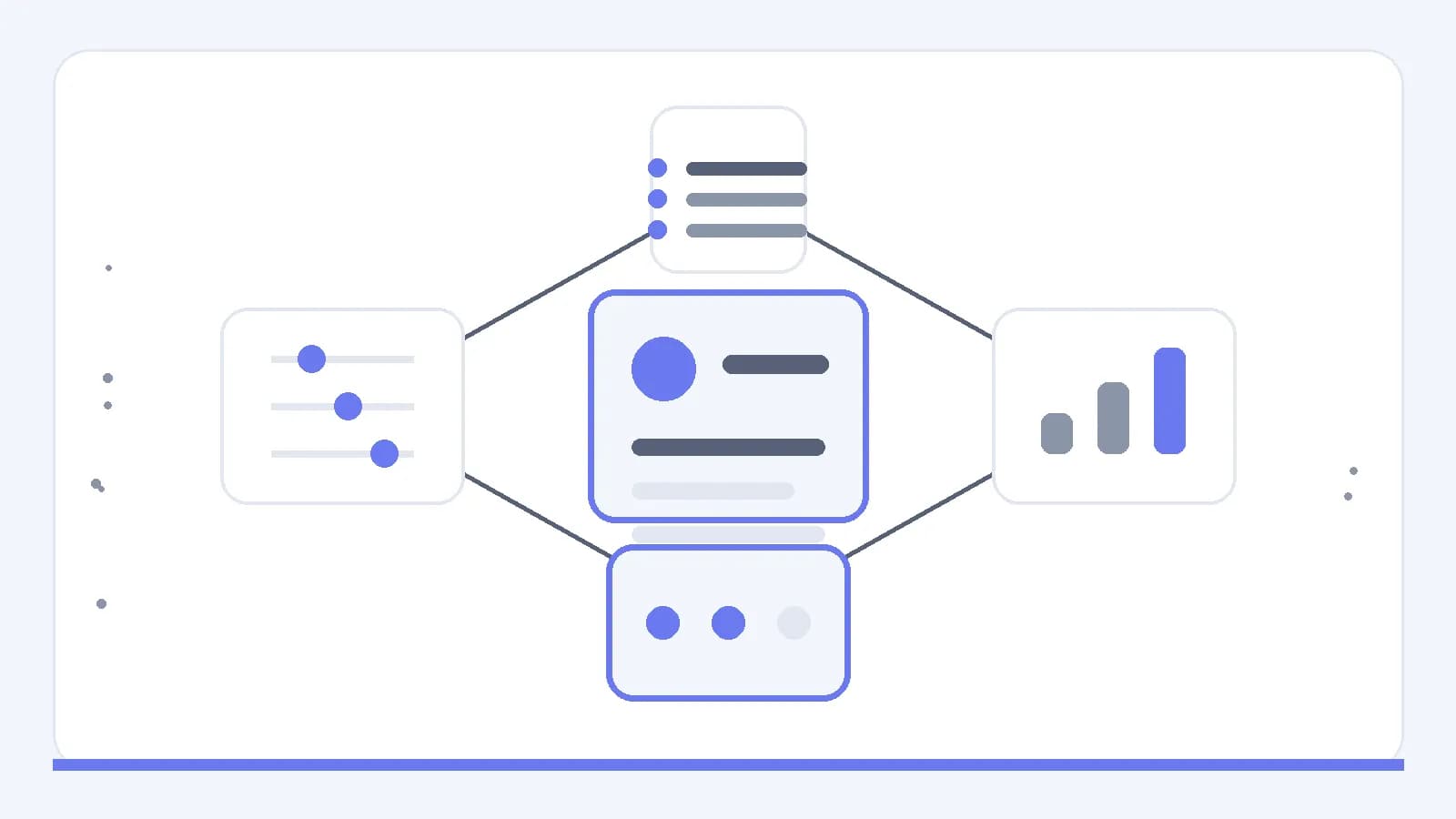
Control should be evaluated across the full sequence from input selection to execution. A controlled evaluation loop means checking each stage, measuring behavior against predetermined expectations, reviewing system status and confirming that human controls still work when conditions change. The purpose is to identify places where an apparent choice does not affect the eventual action.
An evaluation loop for checking whether human controls remain connected to each stage of a consequential workflow.
Test cases should include incomplete inputs, conflicting instructions, delayed processing, edited drafts and unavailable dependencies, meaning required components or services that the workflow relies on. The expected response should be decided before testing begins: stop, request clarification, preserve the draft or offer a path that does not use AI. An audit trail, meaning a record of relevant inputs, reviews and actions, may also be appropriate when later inspection is a product requirement.
Evaluation should include the boundaries between states, not only the quality of the generated material. A team can inspect whether cancellation prevents execution, whether edits trigger renewed review and whether stale output remains clearly marked. It should also verify implementation conditions for each supported platform rather than assume that navigation, background processing or confirmation behavior will remain identical across iPhone, Android, Desktop and web.
Turn the framework into product decisions
A practical sequence is to classify the consequence, separate generation from execution, expose decision-relevant inputs, design a specific review state and test the complete control loop. Each step should produce an explicit product rule rather than a general commitment to transparency. Those rules can specify what stops the workflow, what invalidates approval, what remains editable and what information must be visible at confirmation.
The final question is whether a reviewer can understand what is about to happen, identify the information behind it, make a meaningful change and stop the action without ambiguity. If any answer depends on a hidden assumption, that point needs another product decision before the feature is allowed to carry greater responsibility.