A State-by-State Framework for Product Reliability
A practical framework for handling states, failures, recovery, persistence and release checks so web and Desktop products remain coherent during ordinary use.
Supermoon Software / September 29, 2026 / 5 min read
A useful working definition of finished software is not software without defects. It is software whose important states have been considered, connected and given an understandable response. The main path matters, but interrupted tasks, stale data, delayed operations and partial recovery also deserve explicit decisions.
Reliability work turns those possibilities into product choices. For web and Desktop teams, that means mapping what can happen, deciding what the interface should communicate and checking whether recovery preserves the person’s work. The framework below keeps that effort practical without treating every remote possibility as equally important.
Define completion through handled states
A product state is the current combination of interface, data and ongoing activity. A sign-in screen, a document being saved and a failed import are different states even when they appear within the same feature. Reliability planning should name the states that matter rather than examine only a completed path.
The team can describe each important state with a compact set of questions. The answers create a shared definition of what handled means, while leaving room for implementation choices that must be verified in each target environment.
- What initiated the state, and what information is available?
- What should the interface communicate while work is in progress?
- Which action can continue, retry, cancel or return safely?
- What information must remain if the product closes unexpectedly?
- How will the team verify that the state has ended correctly?
The goal is not a catalogue of every theoretical condition. It is a prioritized map based on possible impact, relevance to the intended workflow and difficulty of recovery. A cosmetic mismatch may deserve less attention than an uncertain save operation when the latter could affect work the product is expected to keep.
Map transitions, not isolated screens
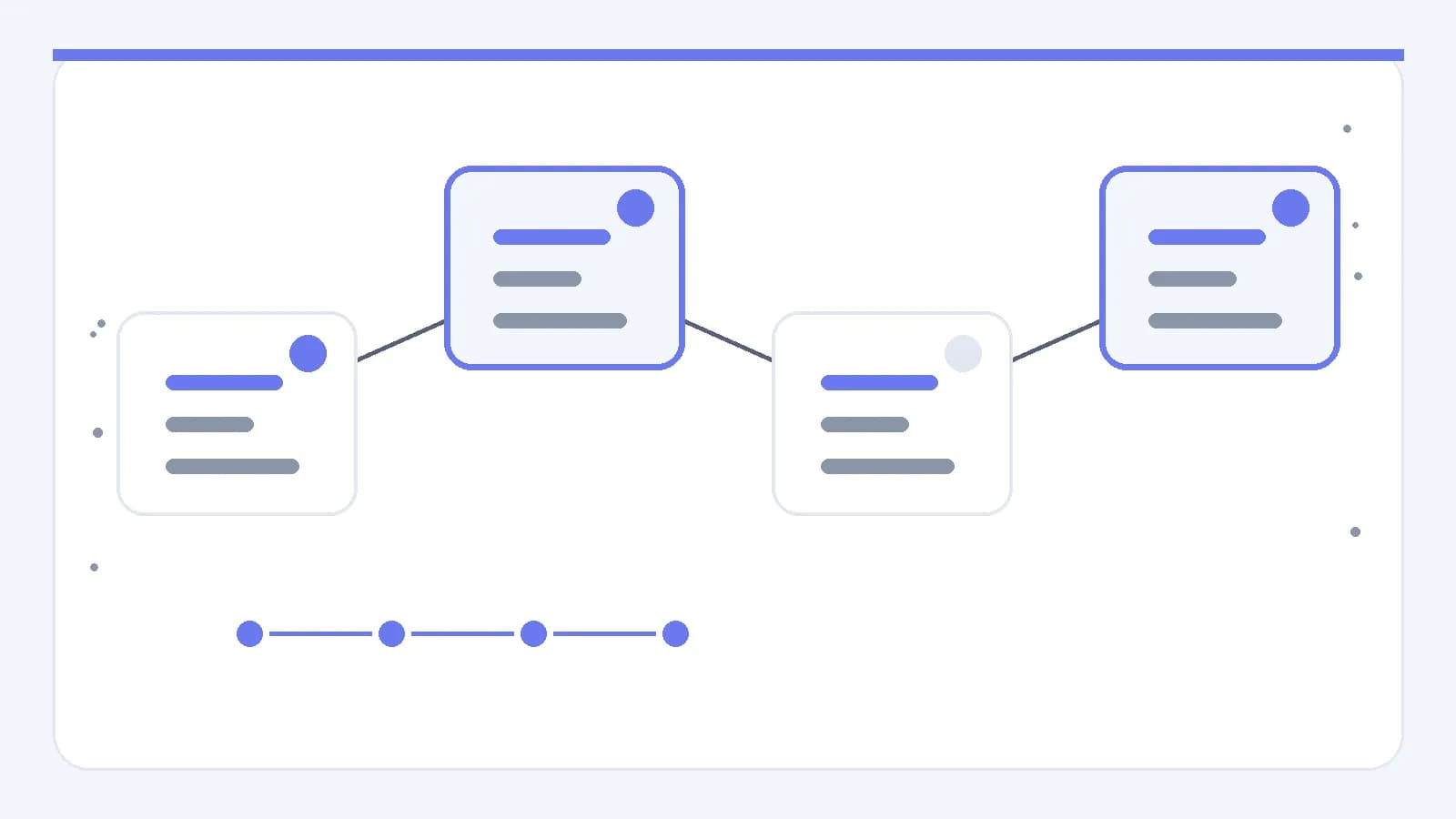
A transition is the movement from one state to another. A reliability review should examine these boundaries because data, interface feedback and ongoing work must stay aligned there. A screen may look correct in isolation while the path into or out of it remains undefined.
A transition review can use the same sequence throughout the product. This gives design, engineering and testing a common structure for discussing what begins the change, what remains unresolved and which destination should follow each possible result.
- Identify the action or condition that begins the transition.
- Record the data that must exist before work proceeds.
- Decide what feedback appears while the result remains unresolved.
- Define successful, failed, cancelled and interrupted destinations.
- Verify whether repeating the action creates a safe result.
For web and Desktop products, teams should verify relevant runtime conditions rather than assume identical behavior across environments. Storage availability, window lifecycle, network access and background execution are conditions to examine where they affect a transition. The intended product response should remain coherent even when the underlying implementation needs to differ.
Make failure visible and recoverable
A failure message should reflect what the product can actually verify. If the result is uncertain, the interface should avoid implying that nothing happened or inviting a repeated action before possible duplication is considered. Wording can distinguish a confirmed failure from an operation whose outcome still needs checking.
Recovery means returning to a usable state without discarding more work than the situation requires. The appropriate route depends on what the product can verify. A retry might fit a reversible read operation, while a write operation may require a status check before another attempt.
- Preserve entered information when doing so is safe and relevant.
- State which operation failed without exposing unnecessary implementation detail.
- Offer actions that match what the system can currently verify.
- Keep a path back when immediate recovery is unavailable.
Teams should also decide how unresolved conditions become visible during development and support. Diagnostic records are structured details about significant operations and errors. They should provide enough context to investigate a sequence without collecting unrelated content, with the exact boundaries chosen according to the product’s privacy decisions.
Preserve continuity across interruptions
Persistence means keeping selected data beyond the immediate running session. It can be used for drafts, settings and progress, but the product must define which copy is authoritative. If local and remote copies can diverge, the team needs an explicit rule for choosing, merging or presenting that conflict.
A practical review should ask what needs to survive closing, reloading, signing out or losing connectivity. Each condition must be verified in the intended web and Desktop environments. The interface should also distinguish saved work from work that remains pending whenever leaving before completion could create uncertainty.
Build checks around risky boundaries
Testing should follow the state map instead of repeating only the main path. A regression is behavior that worked before a change but no longer does. Regression checks can concentrate on boundaries where several parts meet, such as saving during navigation, reopening incomplete work or retrying after an uncertain result.
A compact release routine can combine automated checks with focused manual review. Teams can automate stable, repeatable conditions and use manual review for wording, timing and visual clarity in selected scenarios. The balance should be treated as a product decision shaped by risk, coverage and maintenance cost.
- Select the transitions where lost work or duplication would matter most.
- Check ordinary success before testing interruption and recovery paths.
- Repeat important checks in every supported environment being released.
- Record unresolved risks with an owner and a clear verification condition.
Release decisions should consider the whole recovery path, not merely whether an error appears. When a check fails, the useful questions are whether the product remains understandable, whether work can be preserved and what must be verified before release. This approach supports prioritization without treating every defect as equivalent.
Turn reliability into a repeatable review
The practical framework is straightforward: name important states, map their transitions, define accurate failure responses, preserve continuity where it matters and test the riskiest boundaries. Each step produces a concrete artifact that can be reviewed alongside design and implementation rather than left for the final release check.
A sensible next decision is to choose one central workflow and trace it from entry through completion, interruption and return. Mark every point where the product lacks a verified response, then prioritize those gaps by possible loss, confusion and recovery difficulty. This creates a bounded plan for making reliability part of the product’s normal design and development work.