A Practical Framework for Mobile App Quality
Crash-free operation is only one part of mobile app quality. This framework examines complete journeys, state, recovery, boundaries and release decisions.
Supermoon Software / September 4, 2026 / 5 min read
A mobile app can remain open and still fail at the task in front of it. A draft may be lost, a control may appear to work without changing anything, or an interrupted process may resume in the wrong place. None of these examples requires a crash, yet each represents a quality problem worth finding before release.
Crash reporting remains useful, but it covers one failure class. A broader quality practice asks whether the app preserves intent, communicates its state, handles changing conditions and supports recovery. The goal is not to eliminate every possible defect. It is to identify the failures that most affect useful work and make deliberate decisions about them.
Start with complete product journeys
Screen-by-screen review can miss problems between screens. Mobile quality is better examined as a journey: a sequence that begins with an intention, passes through decisions and system boundaries, and ends with a result the person can recognize. For example, creating a document includes entry, editing, saving, leaving, returning and confirming that the content remains available.
- Name the task in language that describes an intended result.
- Record each visible state and the transition that connects it.
- Add likely interruptions, including cancellation, delay and lost connectivity.
- Define what successful completion looks like from the interface.
- Identify a safe recovery path for incomplete or uncertain outcomes.
Journey maps should include branches rather than only the preferred route. A permission may be unavailable, submitted data may be rejected, or the app may reopen after an interruption. These are implementation conditions to verify, not assumptions about any operating system. Mapping them makes it easier to decide which outcomes need prevention, explanation or recovery.
Evaluate quality across several layers
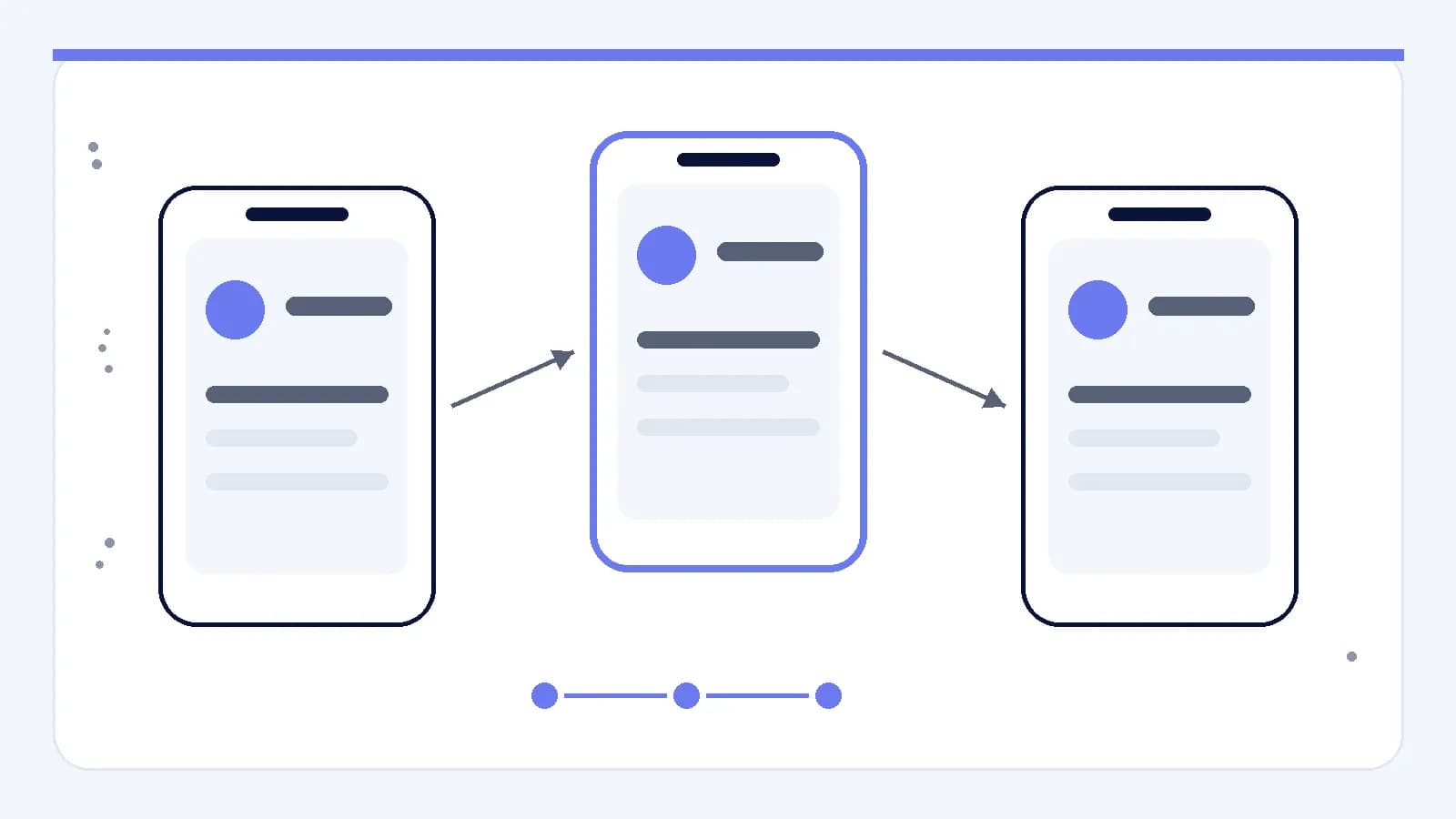
A practical review separates quality into layers so that a stable interface does not hide incorrect behavior. Each layer asks a different question, and the answers can be combined into a release judgment. The categories need not become separate departments or dashboards. They are prompts for examining the same journey from several angles.
- Functional correctness asks whether an action produces the intended result.
- Continuity asks whether progress survives navigation, interruption and return.
- Clarity asks whether the current status and next action are understandable.
- Recovery asks whether failure leaves a safe and useful path forward.
- Efficiency asks whether the journey uses reasonable time, attention and device resources.
Telemetry, meaning data recorded about app events and conditions, can support this review when collection is appropriate and permitted. It should be connected to specific questions. A completion event may help reveal where a journey ends, while a retry event may help locate friction. Instrumentation, the code that records those events, also needs testing so that missing or duplicated records do not distort release decisions.
Make state and recovery explicit
State is the information an app needs to represent what is currently true, such as an edited value, a selected item or a pending operation. Quality problems emerge when visible state and stored state disagree. A useful specification names the owner of each important value, when it changes, where it is stored and what happens if an update cannot be confirmed.
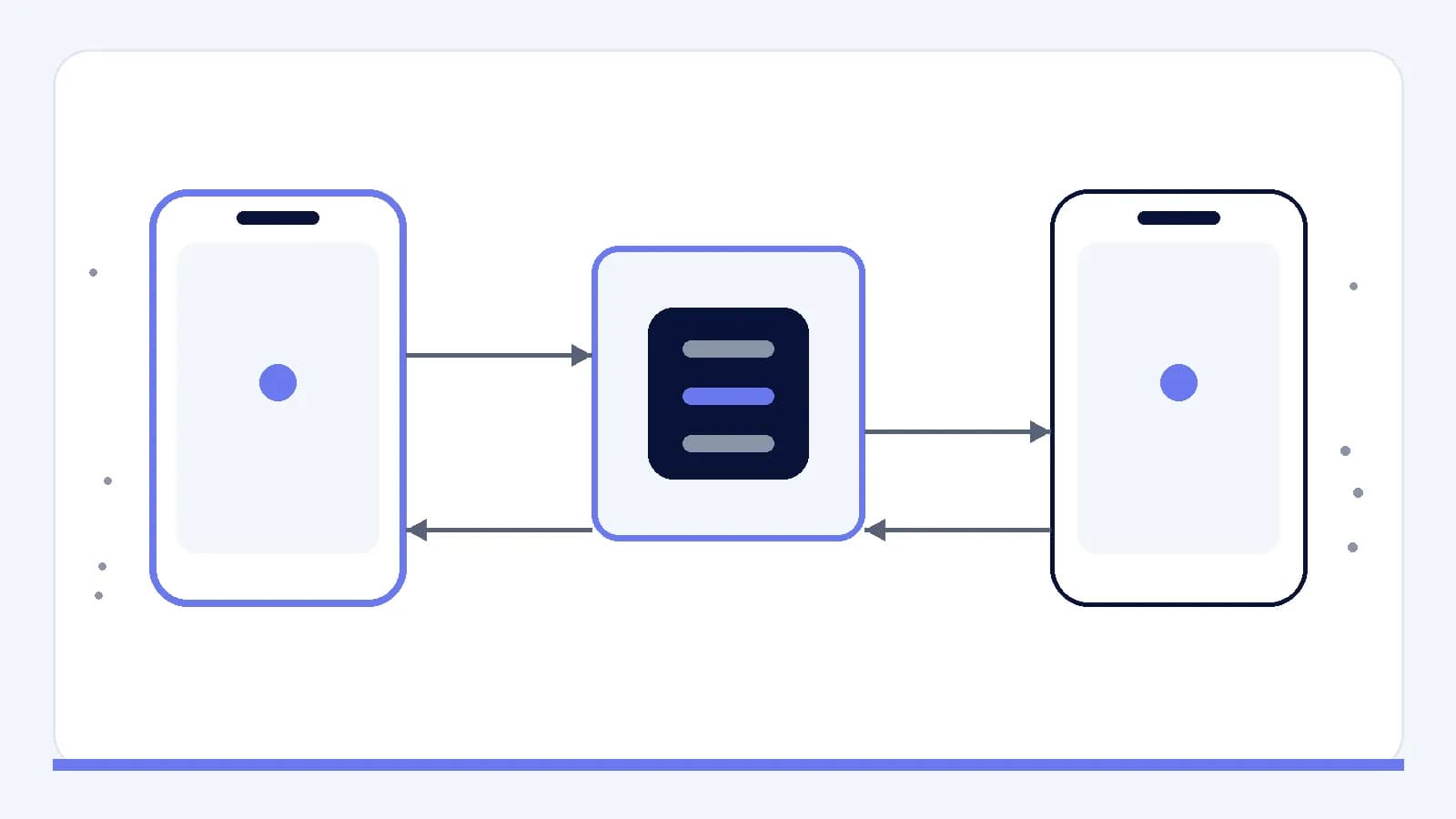
Recovery design should distinguish between failure, delay and uncertainty. If an operation fails, the interface may offer correction or retry. If it is delayed, the app may preserve progress while communicating that completion is pending. If the outcome is uncertain, repeating the action could create another problem, so the team should verify the result before offering a retry. The appropriate behavior depends on the operation and the systems involved.
Test boundaries rather than only screens
Many quality risks sit at boundaries: between interface and storage, local and remote data, one account state and another, or the app and a system capability. A boundary test changes one condition while preserving the intended task. This makes the expected response easier to define and the observed result easier to interpret.
- Pause or cancel during a meaningful transition, then inspect preserved progress.
- Change connectivity while data is being requested or submitted.
- Remove an optional permission and verify an alternative path.
- Reopen the app with incomplete work still present.
- Present stale or conflicting data and inspect the resolution path.
These tests should use conditions the product team can reproduce and observe. Relevant evidence may include the visible interface, stored values and permitted diagnostic records. The team should verify which lifecycle, background and permission conditions apply on each supported platform rather than carrying expectations from one environment to another. Accessibility settings and constrained device resources can be treated as additional boundaries with defined expectations.
Turn findings into release decisions
A defect list becomes more useful when each item includes context and consequence. Severity alone can be vague. A release decision should consider the affected journey, whether data or intent is at risk, the availability of recovery, the clarity of the interface and the team’s ability to detect recurrence after release.
- Reproduce the condition and record the smallest reliable sequence.
- Identify the journey, boundary and quality layer involved.
- Describe the consequence without assuming a person’s reaction.
- Decide whether to fix, contain, monitor or defer the issue.
- Add a focused check that can detect the same failure again.
A quality budget can help organize tradeoffs. Here, a quality budget means an explicit limit on accepted risk, not a financial amount. A team might decide that uncertain data submission blocks release, while a recoverable visual inconsistency can be deferred. The value comes from writing the rule before release pressure shapes the interpretation, then revisiting it when the product or implementation changes.
Build quality around the work that matters
Crash-free operation remains one useful signal, but it should sit inside a wider model. Begin with complete journeys, examine correctness, continuity, clarity, recovery and efficiency, then test the boundaries where state can diverge. Use telemetry only where it answers a defined question, and pair automated checks with direct inspection of meaningful states.
The practical next step is to choose one important journey and map it from intention to confirmed result. Add interruption and recovery paths, assign ownership for important state, and define the evidence needed for a release decision. Repeating that process across the app creates a quality practice grounded in useful work rather than a single technical measure.