A Decision Map for Meaningful App Marketing Metrics
A practical framework for selecting app marketing metrics that connect acquisition, onboarding, payment and sustained product value without rewarding noise.
Supermoon Software / October 23, 2026 / 5 min read
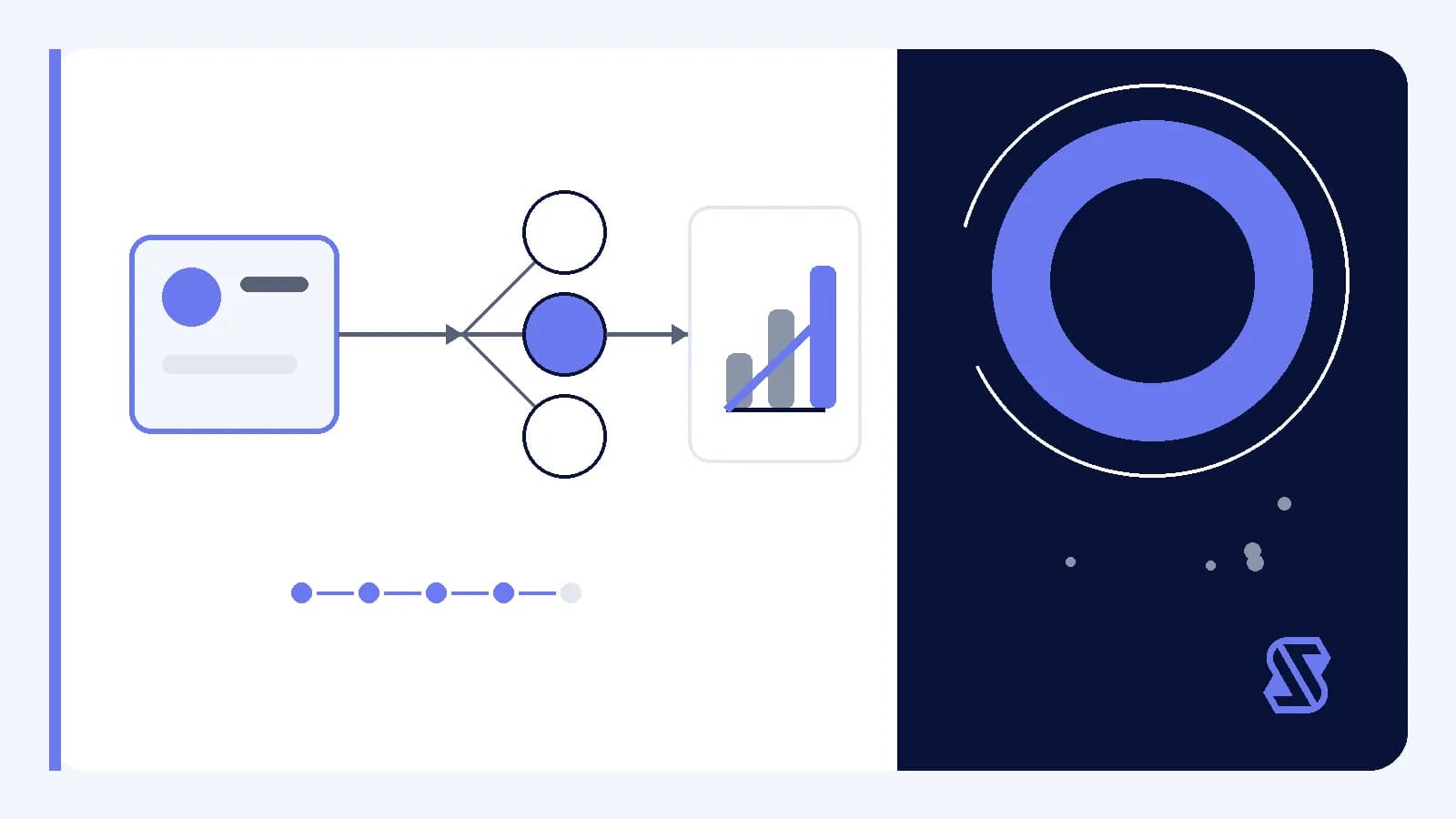
Marketing metrics become useful when they help a team choose between concrete actions. A large dashboard may describe activity while leaving the actual decision unresolved. The stronger starting point is not what can be counted, but what the team might change in the message, audience, onboarding or product.
The commercial model shapes that choice. A subscription creates recurring payment decisions, while a one-time purchase concentrates revenue around a single transaction. Both models still need evidence that the acquisition promise and the product experience belong to the same coherent journey.
Start with the commercial model
For a subscription app, the measurement plan should separate an initial purchase from later renewal decisions. For a one-time-purchase app, purchase conversion may carry more immediate commercial weight, but product use, support demand and refunds can still indicate whether the marketing promise was appropriate. The exact signals available through stores and payment systems are implementation conditions the team must verify.
Write down the economic event before selecting a marketing metric. Then identify the product experience that should reasonably precede it. This prevents a convenient acquisition number from becoming a substitute for meaningful progress.
- For subscriptions, distinguish starting a paid relationship from maintaining it through the relevant renewal point.
- For one-time purchases, connect the transaction with a product outcome that indicates the promise was fulfilled.
- For either model, treat refunds or cancellations as diagnostic signals whose meaning requires product and message context.
- Record platform or payment constraints before assuming that equivalent events can be measured across every channel.
Map the journey before choosing numbers
A useful measurement map begins with the acquisition message, follows the intended audience path and reaches first-run onboarding. Conversion means the share of eligible people who complete a defined action. It only becomes interpretable when the eligible group, action and measurement boundary are explicit. A purchase conversion and an onboarding completion conversion answer different questions.

Several messages may lead into the same onboarding flow, or one message may address several audience contexts. Those paths should not automatically be combined. A team can instead ask whether each message sets an expectation that the shared onboarding can honor. If not, the decision may concern message scope, audience selection or the first-run experience rather than acquisition volume.
Use outcome, diagnostic and guardrail metrics
A compact metric system can assign each measure a role. An outcome metric reflects the result the team intends to improve. A diagnostic metric helps explain movement in that result. A guardrail is a measure used to prevent local optimization from damaging another important part of the journey. These roles reduce the temptation to treat every visible number as equally important.
- Choose one commercial outcome tied to the purchase model, such as an initial transaction or an eligible renewal.
- Choose one product outcome that represents meaningful early value, defined according to the app’s actual purpose.
- Add diagnostic measures for the steps where a message, onboarding choice or payment boundary could create friction.
- Add guardrails for unwanted effects, such as refunds, cancellations, support burden or abandoned onboarding.
Retention means continued product use within a deliberately chosen interval. It may be relevant to both purchase models, but it should not be included by habit. The team should first state why continued use matters for the product and which decision the measure will inform. A utility designed for occasional tasks may require a different interpretation from an app intended for regular use.
Write a measurement contract
Each selected metric needs a measurement contract: a short specification describing the event, eligible population, time boundary, exclusions and decision owner. Instrumentation, meaning the product events and records used to construct a measure, should follow this contract. Otherwise, a precisely calculated number can still represent an unclear question.
- Name the action and the product state in which it can occur.
- Define who is eligible to enter the calculation and why.
- State when measurement begins and when the observation is considered complete.
- List known exclusions, duplicate-event risks and cross-platform gaps requiring verification.
- Assign the decision that a meaningful change would prompt.
Cohorts are groups formed around a shared starting condition, such as an acquisition message or purchase entry point. Comparing cohorts can preserve context that an overall average would hide. Attribution is the rule used to connect an outcome with an earlier marketing touchpoint. Rather than treating attribution as certainty, document the rule and test whether it is adequate for the decision at hand.
Turn measurement into a learning loop
Metrics support learning when they connect a controllable choice with an observable result. A hypothetical test might narrow an acquisition message while leaving onboarding unchanged, or revise onboarding while holding the message stable. The purpose is not to declare a universal winner. It is to reduce ambiguity about which product or marketing control should change next.

- Change one primary control when practical, while recording other changes that could affect interpretation.
- Define the expected direction of the outcome, diagnostic and guardrail metrics before reviewing results.
- Segment only where the distinction corresponds to a plausible product or marketing decision.
- Treat an inconclusive result as a reason to revisit the question, implementation or measurement boundary.
A closed loop also needs stopping rules. A team should decide in advance what evidence would support keeping, revising or reversing a change. If the outcome improves while a guardrail deteriorates, the tradeoff should return to product judgment rather than being hidden inside a blended score. If instrumentation is incomplete, fixing the measurement may be the next decision.
Choose the smallest useful metric set
Begin with the purchase model, define the intended product value and map the path from acquisition message to onboarding. Then select one commercial outcome, one product outcome, a limited set of diagnostics and explicit guardrails. Give each metric a contract that states what it measures and which decision it can influence.
Review the set whenever the message, onboarding flow, payment boundary or product purpose changes. Remove measures that no longer guide a choice, and separate groups only when doing so changes the available action. The practical aim is a metric system small enough to understand and specific enough to support the next responsible decision.